

Everything about Cars and Automotive
![[chevrolet_el_camino_01.jpg]](https://blogger.googleusercontent.com/img/b/R29vZ2xl/AVvXsEg_js6Kne2ATFCgSxWHZbkJmfE3eQzP-vksDNt2sQCwSiAIgY1h8_c70R5OyNccEOKw15U4hzf1LrFUsrphtJL4h-iNiP1uQvSzoeBiOatvoyR-FzGGoXrHMG9OLtsjYk3TSMl7Sk9FA0Iw/s1600/chevrolet_el_camino_01.jpg)
![[chevrolet_el_camino_02.jpg]](https://blogger.googleusercontent.com/img/b/R29vZ2xl/AVvXsEh71AK3_9PUDJ6vAFFRRYQ7s3pOqMRBjW61wnGVqoPBIKeW092qYdVicwiPyo36UQssj2lVMIDupM8xR1IBBoTE960CgFPRsFcsnHSothC0m-fzv4ZZtSHxNdvVUZHFLMmibMWNCy0teK8X/s1600/chevrolet_el_camino_02.jpg)
![[chevrolet_el_camino_03.jpg]](https://blogger.googleusercontent.com/img/b/R29vZ2xl/AVvXsEirle4HG6kV8xZusMPMwB_D2j6YatVu_GJTFjw0kv9yQs-qeIoEsIs0c1xkL13w1r8btH74CLS_SqPkcxMj5A0o7xKLRR3DP2NnENTpbTT91OoBOEBb86Q2xlsqNUzN0fu5f0owhx-hFbaU/s1600/chevrolet_el_camino_03.jpg)
![[chevrolet_el_camino_04.jpg]](https://blogger.googleusercontent.com/img/b/R29vZ2xl/AVvXsEj0EQs5f1jBOb8fzIwiIpFa3DeQACfmx-PLkOx63X02P6r12jerssaLgfjBiySuhNxZpDPDyxWWuc6fwYdbbTIJlPjBE9TAiAiym6yOtjWCeFYpq6t7jLC1iV05riqhjJOKl5ekG-VHJAp_/s1600/chevrolet_el_camino_04.jpg)
![[chevrolet_el_camino_05.jpg]](https://blogger.googleusercontent.com/img/b/R29vZ2xl/AVvXsEhRc0nRWh0WYT4qt0y3jSJZ0947Zdo_lHEN-BnOQlBxAPajYM7GBXRBN4d9DzV1b7SV99aN8sqxAylN0tNxrq3PbvUwvft0DivyRfht0-JElFAAZfAQn8ubiJPj7rWzzcxUR9IlaBsmRBhW/s1600/chevrolet_el_camino_05.jpg)
![[chevrolet_el_camino_06.jpg]](https://blogger.googleusercontent.com/img/b/R29vZ2xl/AVvXsEjCDddo7jy76Sw6_ZEtsW54W2KACUb_BbHkYBi1JylKHi-WUlqZH3D9orr-SZJJ4LnmABZLKYBULMlk0EEoxp2hosq7gy7j7DobEV3BcSZ5byoWf0d_ioCnvbdPQMeFDCff8uGrArn76gdK/s1600/chevrolet_el_camino_06.jpg)






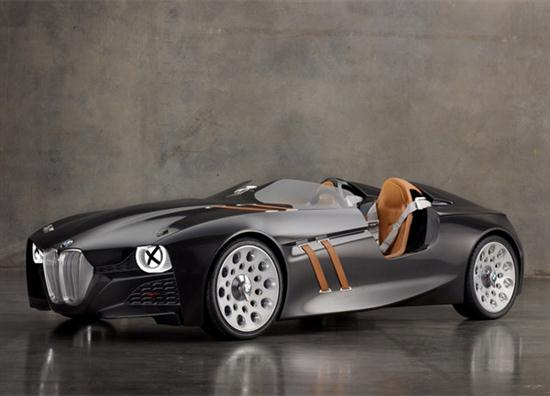


BMW 328 Hommage.
The BMW 328 is considered the most successful and best-looking sports car of the 1930s. The BMW 328′s success was the result of its design parameters – through the use of systematic lightweight construction, aerodynamic lines, optimum engine types and outstanding suspension technology, it laid the foundation stone for a new vehicle concept, by which performance only leads to success if combined with perfect harmonisation of all parameters and maximum efficiency.
With these characteristics, the BMW 328 was even then the embodiment of what the BMW brand still stands for today – dynamics, aesthetics and a high level of innovation.
This year, the dream sports car is celebrating its 75th birthday. The festivities will begin near Lake Como at the Mille Miglia. There, the main focus will be on the fascination of the BMW 328 racing car. To this day, the award-winning vehicle BMW 328 Touring Coupé still holds the record for the highest average speed on the Mille Miglia circuit and, in 2010, was again able to win the historic revival of the race. A week later at the Concorso d’Eleganza Villa d’Este, the two-seater’s functional aesthetics will be the focus of attention. In this area of conflict between tradition and modernity, the BMW Group is paying tribute to the BMW 328 on the occasion of its anniversary with a special model – the BMW 328 Hommage. “With the BMW 328 Hommage, we wish to pay homage to the passion and inventiveness of the fathers of the BMW 328″, explains Karl Bäumer, CEO of BMW Group Classic. “They created an icon, which is considered a milestone in the history of the automobile.” The BMW 328 Hommage translates the principles and the character of the vehicle of that time into present times and offers a possible interpretation of how the designers of that time, Fritz Fiedler and Rudolf Schleicher, might have built the BMW 328 in the present day using current technology.
The BMW 328 – lightweight construction as a principle.
The BMW 328 was also a special BMW insofar as the lightweight construction principle was systematically implemented on a BMW automobile for the very first time. Wherever possible, the lightest and at the same time most robust materials were used, thereby keeping the gross vehicle weight down to just 780 kilograms. In order to translate the idea of lightweight construction into this day and age, major parts of the exterior and interior of the BMW 328 Hommage are made of carbon fibre reinforced plastic (CFRP). Whilst in the old days they favoured the materials aluminium and magnesium, CFRP is now considered to offer the best ratio between weight and stability. The high-strength fibre fabric is lighter than aluminium, but also more stable. Wherever the material has been used on the BMW 328 Hommage, it is also visible.
In this way, the BMW 328 Hommage not only reflects the lightweight construction principle
functionally, but also visually. The BMW Group leads the way in the production and use of CFRP in automotive construction and already possesses many years of experience in the series production of CFRP roofs and structural components for the BMW M6 as well as CFRP roofs for the BMW M3.
Not only do the exterior and interior CFRP elements of the BMW 328 make an exceptional statement. The up-to-date implementation of the original vehicle character is also expressed in the choice of other materials used on the inside and outside of the vehicle. Fine leather, matt and high-gloss black polished aluminium as well as the CFRP interior visualise in the BMW 328 Hommage the pure and functional roadster character of the sports car of that day. Inside the
vehicle there are also numerous details derived from motor racing, offering a hint of the BMW 328′s most successful motor sports career. For instance, the premiere of the vehicle in 1936 did not take place at a motor show, but on the race-track. In its first race, the BMW 328 declassified the entire higher-powered competition and dominated the racetracks of Europe during the years that followed.
Dynamics and lightness in the interior.
The expressive exterior design of the BMW 328 Hommage depicts the modern interpretation of a highly emotional and dynamic two-seater Roadster – just like the BMW 328 75 years ago. “Hommage cars have a long tradition in the BMW Group. Based on our design philosophy “Rooted in history, moving forward in design”, they demonstrate the significance of history for the present.
Even 75 years ago, the BMW 328 stood for sportiness and agility through light-weight construction. The BMW 328 Hommage Car pays tribute to this past and shows how BMW lightweight construction will develop. Carbon is the material of the future.” (Adrian van Hooydonk) In keeping with its role model, the BMW 328 Hommage has a streamlined design and is clearly recognisable as a sports car. Precise lines run across all of the car body’s taut surfaces. As a result, a subtle contrast between the tense surfaces and the sharp edges is created within the flat, dynamic silhouette. The strong wedge shape accelerates the vehicle even when it is at a standstill, the scoops behind the seats take up the lines coming from the bonnet, guiding them dynamically into the rear end. The structure of the CFRP mats gives the vehicle an appearance of depth, the diagonal lines of the woven CFRP additionally underscoring the dynamic design vocabulary of the roadster. Thanks to concise weaving, the carbon structure is clearly visible, optically emphasising the lightweight construction principle. Like the first BMW 328 test vehicles, with which the model celebrated its triumphant debut on the racetrack in 1938, then going on to gain a number of further successes, the BMW 328 Hommage has no doors. Then as now, deep recesses allow access to the inside of the car. The extremely wide and flat front end is strongly three-dimensional, generous surfaces and concise lines give the front end a powerful appearance. Viewed from the front, the CFRP bonnet appears to encompass the vehicle from above. It embraces the vehicle, framing the slightly set back front end in a very distinctive downward sweep. Due to the almost vertical, low-reaching sidewalls, it simultaneously emphasises the BMW 328 Hommage’s excellent stability on the road. As a result, the vehicle appears to be even flatter and more dynamic as a whole. Under the bonnet, further surfaces rise to embed the top and bottom of the distinctive kidney grille, whilst folding themselves around it to shape the adjacent air intakes. Openings and large air intakes create
visual lightness at the front, simultaneously demonstrating the high air requirement of the powerful three-litre, six-cylinder engine. Three-dimensionally designed lattices inside the front vents form a connection between the headlamps and the kidney grille, with the three-dimensional lattice structure acting as an accentuating feature.
Characteristic kidney shape.
The vertically positioned double kidney grille imitates the slim, vertical kidney design of the early BMW models. In those days, the BMW 328 was one of the first BMWs to feature it, after which it became further established with later BMW models. On the BMW 328 Hommage, the vertically mounted kidney grille is dynamically incorporated into the flat silhouette. It slants back roughly in the middle, thus blending in with the bonnet and the dynamic silhouette when viewed from the side. On the other hand, from the front it appears to be standing upright. The kidney grille bars are more prominently curved than the kidney grille surround itself. The vehicle displays the extremely round and appealing design of the original BMW 328 kidney grille when viewed from the side. The kidney grille surround is also distinctively three-dimensional, appearing to continue inside the vehicle. Its front surface is finished in polished high-gloss, whilst the side surfaces have a matt finish. This detail gives the kidney grille a very high-class and up-to-date appearance. Behind the kidney grille bars, black horizontal fins obstruct the view into the engine compartment – just like on the 328 of 75 years ago.
Athletic rear end.
The rear end takes on the design vocabulary featured on the front of the vehicle. Similar to the front end, sections of the sidewall form the framework for the design elements that appear to protrude from the rear end. Between them, located far to the outside, are two clearly and concisely designed taillights sporting the characteristic BMW L shape. Two filigree luminous elements reflect a strongly curved interpretation of the typical BMW L shape, whilst a concisely constructed bar fitted to the outside of the lamp is directed vertically downward, separating
the lamps towards the outside. The modern functional design of the taillights underlines the technical appeal of the vehicle.
The powerful sculpturing of the rear end also visually conveys the BMW 328 Hommage’s lightness. Large vents and openings characterise the rear end, giving it a light appearance. The distinctively horizontal section below the taillights forms a counterpoint to the intense sculpturing, emphasising the width of the vehicle. Below that, the rear of the car is strongly arched, a concise line partitions the surface, thereby providing an air of lightness. This large sculptural element adopts the form language of the front-end design surrounding the kidney grille.
The wing-shaped element tapers both upward and downward, thus revealing two large latticed air outlets. The circular tailpipes are located inside these two openings. They protrude prominently out of the lattice and, combined with the distinctively designed wing shape of the lower air intake edges, underscore the power of the straight six-cylinder engine.
Details derived from motor racing.
The interior design of the BMW 328 Hommage comprises a number of details that are reminiscent of the successful motor racing history of the BMW 328. For example, the slightly asymmetrically designed windscreen has a recess in the middle, similar to the windscreen design of earlier racing cars. Simultaneously, it marks the areas in which the driver and co-driver sit. Moreover, four wide leather straps run across the bonnet, which appear to dive under the side shoulder surfaces to be continued on the side. This detail, which used to be considered an extremely sporty attribute, is also featured on the BMW 328 Hommage. Combined with the high-gloss aluminium safety buckles, the leather straps provide a touch of class in contrast to the very technical-looking carbon fibre. The modern quick-release fasteners for securing the bonnet bring racing of the past into the present. On the driver’s scoop a large silver “75″ as well as a small logo below it signify the reason for the BMW 328 Hommage. Next to it, the integrated tank filler neck protruding from the right-hand side is a striking detail. Whilst it protrudes prominently from the body of the BMW 328, the BMW 328 Hommage features a version that is integrated slightly more into the bodywork.
The large, prominently designed individual round headlights of the BMW 328 Hommage are reminiscent of the headlamps featured on the BMW 328, which were integrated into the wings for the first time. The three-dimensional interpretation of these round headlights is divided into four transparent, cylindrical elements, these being back-lit by LEDs. Between them, set-back black concave surfaces symbolise the typical tape cross used on headlights in motor racing.
Around the four reflectors an illuminated ring emphasises the circular design of each individual headlamp.
The two-part light alloy wheels featured on the BMW 328 Hommage are a very special interpretation of the characteristic hole pattern of the original rims. The extremely concave high-gloss black aluminium rim boasts a contrasting silver-grey cover made of glass fibre. The insides of the angular milled holes have a high-gloss finish and are distinctively accentuated by a matt overlay. A black chrome butterfly nut bearing the BMW emblem completes the contemporary version of the wheel.
Clear and functional – the interior.
The interior of the BMW 328 Hommage visualises the functional passion the BMW 328 exuded already back then. Thus the design of the interior is also pure and functional today. The entire interior structure is made of CFRP, conveying the lightweight construction concept of the BMW 328 into the inside of the car both visually and functionally. Due to the special application of materials, openings and freely suspended elements, the surfaces and different levels create an
all-embracing feeling of lightness.
Through the use of CFRP inside the BMW 328, the “layering” design principle, with which shapes take on clear functions, adopts a completely new form of expression. Due to its exceptional characteristics, CFRP is in itself robust and can be shaped into self-supporting structures. Hence, only two large surface areas – so-called layers – define the interior of the BMW 328 Hommage. Both of them start at the bonnet and protrude into the interior. One of the layers extends towards the driver, reveals the entire driver’s workplace comprising steering wheel, control elements and scoop, thereby separating the driver and co-driver areas from each other. This spatial separation is indicated by a further material: the elegant, brown leather interior extends from the entrance across the driver’s area, over the seats to the scoop, thus becoming an integral part of the design vocabulary of the first layer. At the same time, the surrounding graphics comprising material and geometry create a link with the co-driver. On the driver’s scoop, a silver-coloured logo bearing the number 75 also gives indication inside the car of the festive occasion in honour of the BMW 328 Hommage.
The second layer begins next to the scoop, making a sweep towards the co-driver, then to float freely in front of him. This gesture creates a sporty but light sense of spaciousness, opening out a functional area in front of the co-driver.
Between the driver and co-driver a multitude of recesses in the instrument panel and centre console create an airy and harmonious spatial experience, bringing the driver and the co-driver slightly closer to each other again in a sweeping gesture. The lines of the woven carbon fibres complement the interior design vocabulary perfectly.
Viewed from above, a slightly asymmetrical design of the bonnet and windscreen underscores the driver-orientated construction of the BMW 328 Hommage. The windscreen is larger within the driver’s area, so the lines of the powerdome are of different length. Behind the windscreen they continue in the inside of the car, so that at this point both the interior and the exterior appear to be intertwined.
Authentic materials.
Apart from CFRP, leather and aluminium, the interior deliberately features very few other materials. But every material that has been used is also visible. This provides the BMW 328 with a special authenticity. The contrast between the cool and technical-looking carbon fibre and the high-quality, warm brown of the leather characterises the interior. The exceptionally soft saddle tan leather has a fine grain and a slightly antique finish. On the seats the high-quality seam pattern enhances the appearance of the leather-covered seats even further. The seams in the centre of the sitting area of the seats and the silver-grey double-felled outer seams are a modern interpretation of the sports seats featured in earlier models, giving the seats additional character and depth. Aluminium is only seldom featured and, depending on where it is used, has a high-gloss or a matte satin finish.
Instruments and tripmaster.
The instruments featured in the BMW 328 Hommage are both sporty and functional to an equal extent. The sparse instrument panel is dominated by the only round instrument – the prominently designed rev counter. Like the cockpit of the BMW 328 and typical of a sports car, the instrument cluster indicates in addition to engine speed only the oil temperature, oil pressure and water temperature. To the right of the rev counter, control lamps and a gearshift point indicator complete the instrument cluster. The instrument surrounds are finished in black chrome and made to the highest standards.
The puristic instrument cluster is complemented by the so-called tripmaster. The instrument panel of the BMW 328 Hommage is a fitted with two iPhones located in special holders and which assume additional display functions for the driver and co-driver. They are integrated into the self-supporting structure of the co-driver layer and, like the instrument cluster, are accommodated in a high-grade aluminium housing. The shape of the housing itself imitates the design of classic stopwatches, the two functions of the tripmaster being accessible through two further openings. Firstly, the iPhones function as stopwatches for measuring lap times and secondly as GPS roadbooks. Using two iPhones the driver and front-seat passenger/co-driver respectively can use both functions at the same time. After a journey, the iPhones can also be taken away in their holders.
Apart from the instruments and the tripmaster, the BMW 328 Hommage is also fitted with further features taken from motor racing. In addition to being equipped with just the bare essentials in order to save weight, the BMW 328 Hommage is also fitted with modern 4-point seat belts, ergonomic seats and the “bone”, a kind of emergency switch-off for the vehicle electronics, which is located between the two seats. The brushed aluminium belt retainers located next to the headrests ensure optimal guidance of the belts. These high-class, functional details are concealed behind the headrests, blending in harmoniously with the overall concept.